8 September 2026 · 7 min read
The Sabyasachi Brand Strategy: How Heritage Becomes a Distinctive Luxury Identity
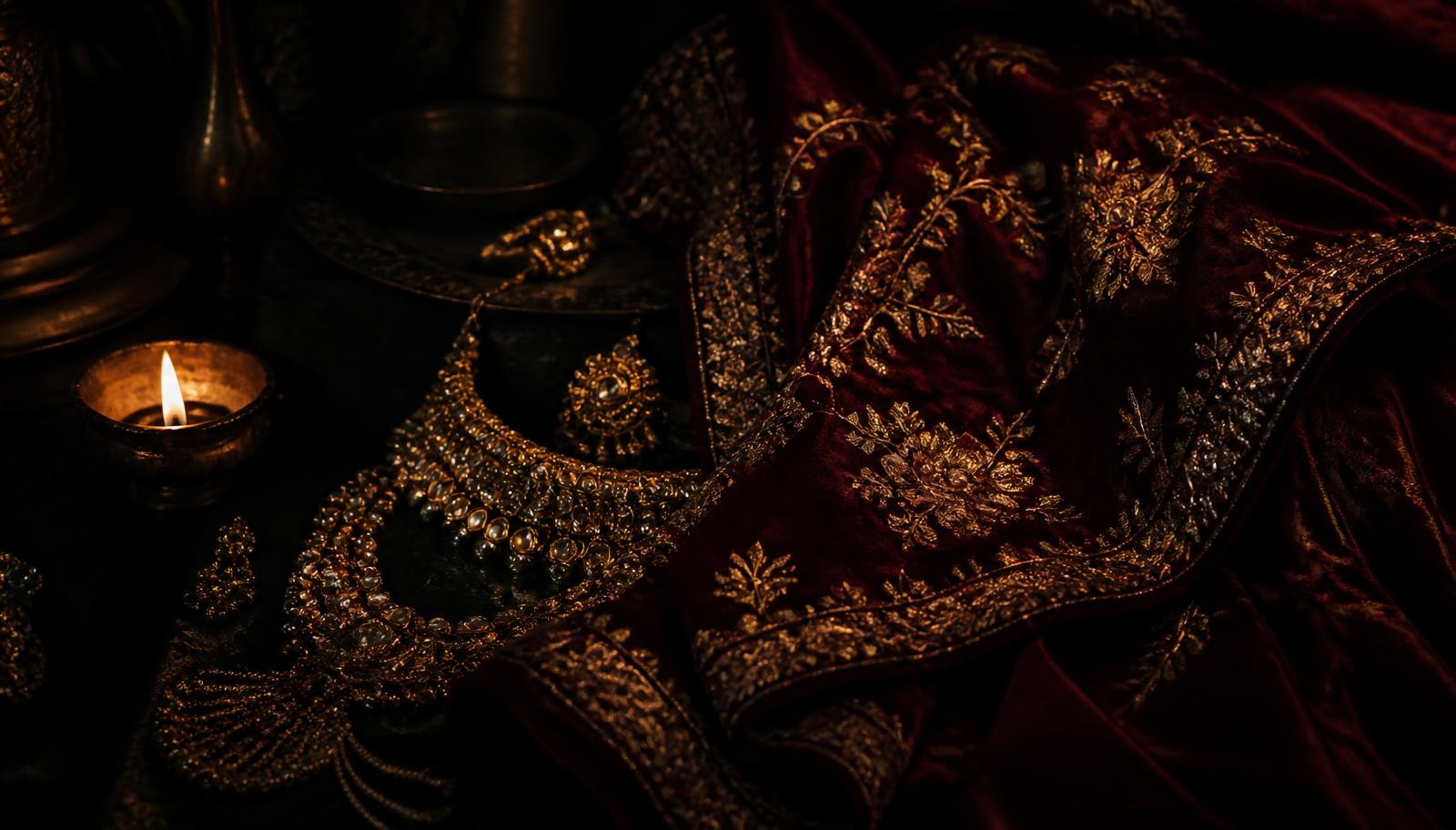
There is something revealing about the way Sabyasachi presents a garment. The jewellery, the room and the surrounding objects seem to belong to the same imagination. You are invited to consider the clothes within a particular idea of beauty, with its own references and sense of time.
For me, that is the most interesting part of the business Sabyasachi Mukherjee has built. The designer has given his name a meaning that can extend beyond an individual collection. His work prompts a question that matters well outside fashion: how does a personal taste become a recognisable brand?
The answer, I think, lies in how carefully the different parts of the house relate to one another. Heritage provides the references. Design gives those references a contemporary form. Imagery and retail make the result intelligible to a wider audience. There is a commercial logic to that continuity, although describing it as a formula would miss much of what makes it compelling.
A particular idea of India
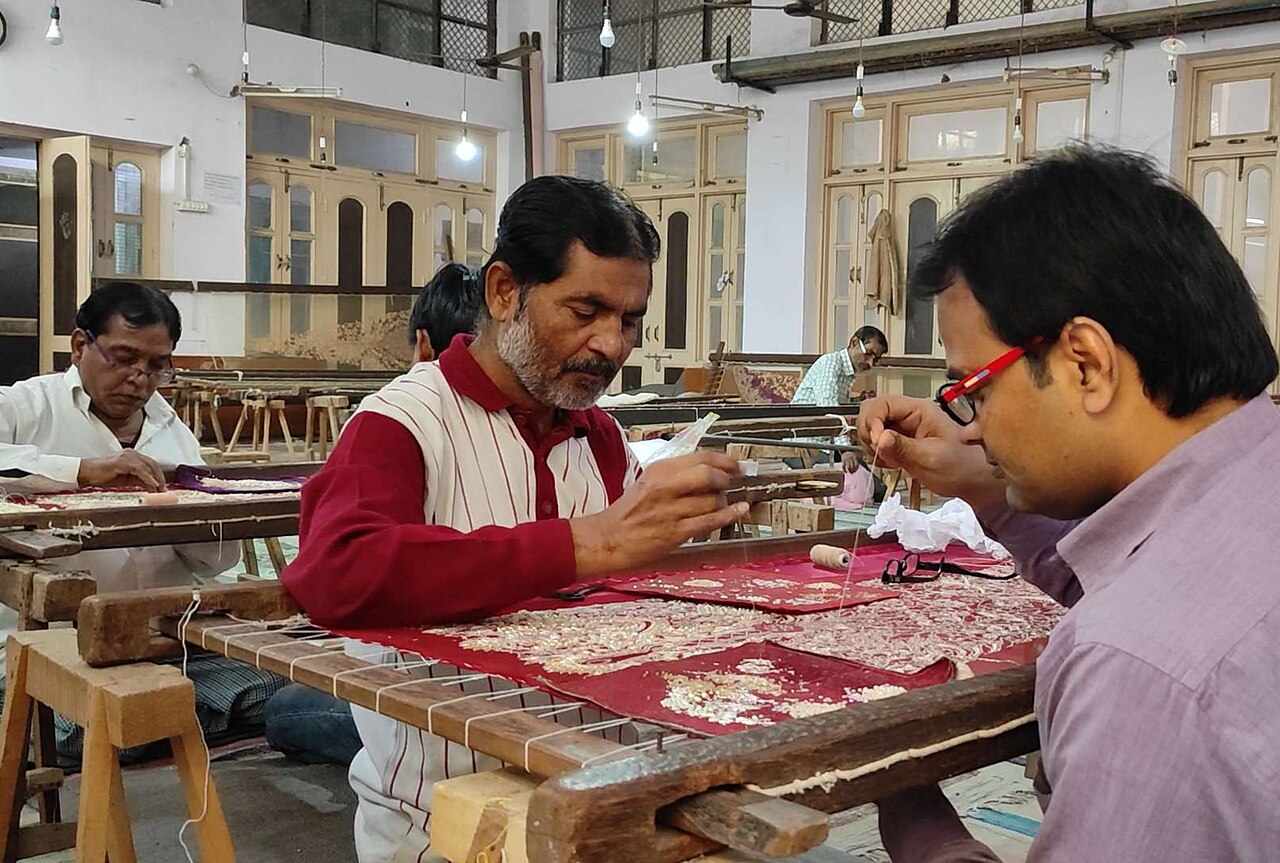
“Indian heritage” is an enormous territory for any brand to claim. It contains different regions, histories, materials and understandings of beauty. The phrase alone tells us very little about what a designer will actually make.
Mukherjee gives it a more particular meaning. Speaking to Walpole in 2025, he connected his appreciation of craft to Calcutta, describing it as part of the city's living tradition. He also explained how heritage textiles could be combined with modern silhouettes. His account allows for change within a continuing relationship with the past. Walpole interview
That specificity matters. A personal interpretation gives the audience something to recognise and, equally, something to disagree with. It has edges. Trying to represent every possible version of Indian luxury would make the brand less distinct.
I find this more persuasive than the broad language of authenticity that so often appears in brand descriptions. Authenticity becomes interesting when you can see the choices behind it: a reference that keeps returning, a material treated with particular care, an unexpected combination that makes sense within the designer's work.
The patience behind a signature
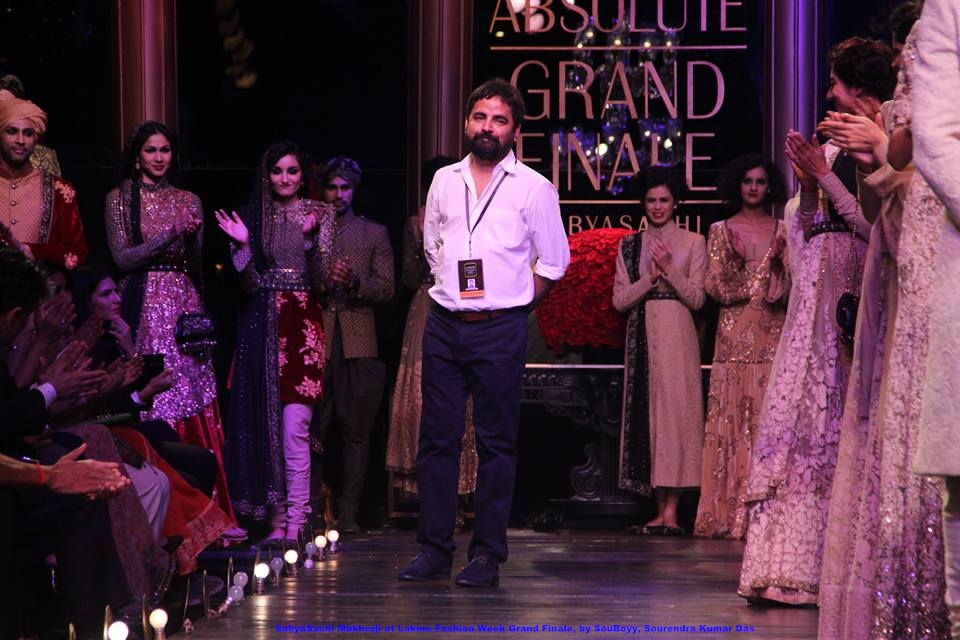
Creative businesses face a peculiar pressure. They need to remain recognisable while continually producing something worth looking at.
Sabyasachi's own history describes its twentieth-anniversary show as returning to ideas from its debut collection, Kashgaar Bazaar. That decision is worth pausing over. Revisiting early work allows a designer to develop a language over time, and gives the audience a chance to recognise its evolution. Sabyasachi's official history
A customer rarely encounters a brand with the intensity of the people working inside it. What feels overfamiliar in the studio may still be taking shape in the public imagination. Abandoning a distinctive idea too quickly can mean discarding it before it has acquired meaning.
But there is a limit. A signature becomes mannerism when familiar details do all the work. The difficult creative task is to preserve a point of view while giving people new reasons to pay attention. Repetition earns its place when there is still thought behind it.
Why bridalwear gave the story weight
The relationship between heritage and bridalwear is particularly strong because the occasion already carries ideas of family, continuity and memory.
A wedding garment may remain in photographs for decades. It can become part of how a family remembers a moment, or how someone remembers a younger version of themselves. In that setting, references to inheritance have an emotional purpose beyond decoration.
The brand records its first bridal collection, Chand Bibi, as a turning point. It also documents wedding commissions for Anushka Sharma and Virat Kohli, and Deepika Padukone and Ranveer Singh. Those examples connect a specific design language with highly visible personal occasions. Sabyasachi's official history
My interpretation is that the occasion helped make the brand's sensibility desirable. Celebrity visibility could amplify a story whose underlying emotions were already familiar. The wish to look distinctive, to honour a tradition and to create something worth remembering can coexist in the same purchase.
That does not tell us why every customer chooses Sabyasachi. It does explain why bridalwear is such a useful setting in which to examine the relationship between a brand's story and the life of its customer.
A store that explains the clothes
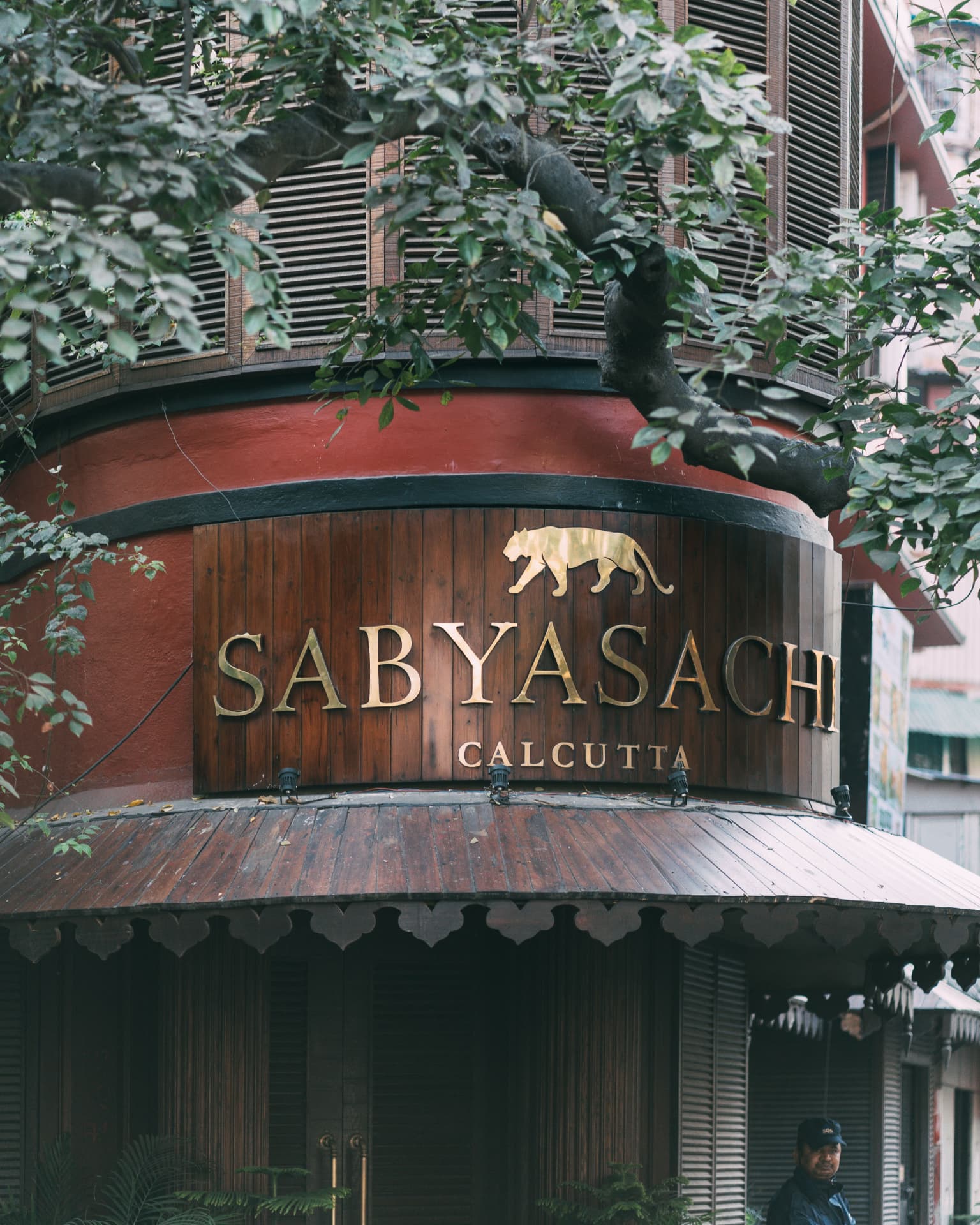
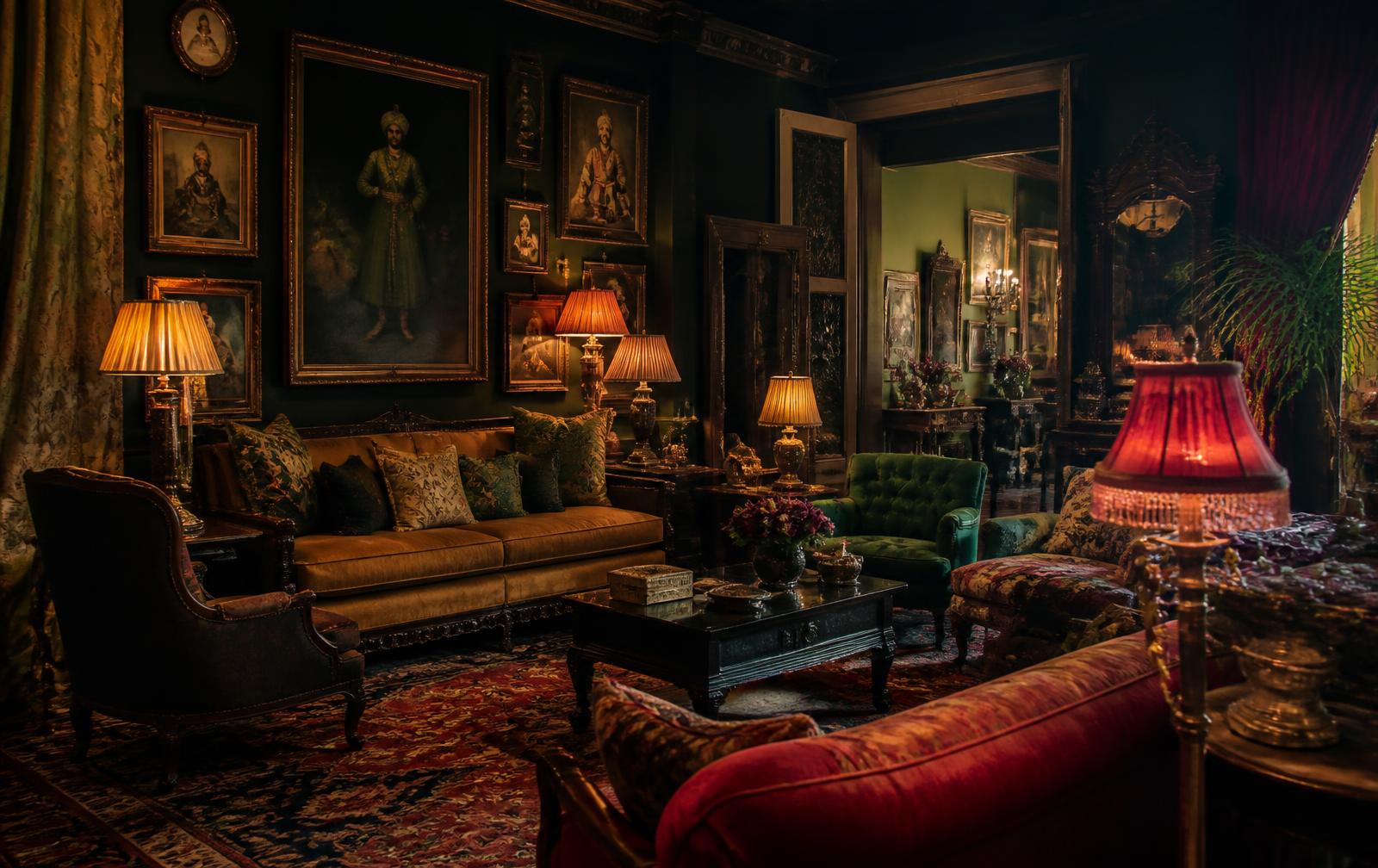
The New York store, which opened in October 2022, makes the relationship between design and setting especially clear. Condé Nast Traveller's account describes Mughal miniatures, Pichwai paintings, Qajar art and chandeliers. Mukherjee linked the interiors to the old homes and palaces of Calcutta. The accompanying collection included dresses, trousers and trenches, extending the house's expression beyond bridalwear. Condé Nast Traveller India
What interests me here is the way a room can teach someone how to look at a product. An embroidered garment seen in isolation invites attention to its surface and construction. Within a carefully composed interior, it also becomes part of a wider taste. The customer can begin to understand the relationship between the clothes, jewellery and objects around them.
This is one reason physical retail can have a purpose that survives the convenience of buying online. A space can convey scale, texture and atmosphere together. Whether a particular store earns a sufficient return is a separate question; beautiful photographs cannot settle its economics.
For a smaller business, the useful principle is coherence within its means. The description, the consultation and the product should make sense together. An elaborate setting cannot compensate indefinitely for an indifferent experience.
How far can a name travel?
The Sabyasachi website now brings together weddings, clothing, jewellery, handbags, belts and eyewear. The range makes the ambition of a broader luxury house visible. Sabyasachi's collections
Expansion changes what is being asked of the brand. A bride and someone choosing an everyday accessory arrive with different expectations. Their purchases serve different purposes, even if both are attracted to the designer's sensibility.
A strong identity can give the second customer a reason to look. The product then has to carry its own weight. Its proportions, finish and usefulness matter alongside the recognisable details. Otherwise, expansion risks asking the name to do more than the object deserves.
This is the tension I would watch as the house develops: how much of its character can travel, and what needs to be reconsidered for each new use? A convincing answer will be visible in the products themselves.
From a founder's taste to a lasting business
In 2021, Aditya Birla Fashion and Retail acquired a 51 per cent stake in Sabyasachi for ₹398 crore, according to the group's brand profile. The partnership announcement also recorded Mukherjee's interest in continuity and sustainable growth. Partnership announcement
There is a substantial organisational challenge beneath those words. A founder can decide whether something feels right through years of accumulated experience. As a business grows, other people need to make those judgments: selecting a material, approving a display, training a retail team or deciding which opportunity to decline.
A distinctive brand therefore has to become understandable inside the company as well as outside it. Its standards need to survive the moments when the founder is elsewhere. This is less glamorous than a collection launch, but it may have more bearing on whether the house endures.
What the story leaves us to consider
There are questions that an analysis of image alone cannot answer. A claim to preserve craft ultimately depends on the people practising it, the conditions in which they work and the opportunities available to them. A designer's cultural authority deserves to be considered alongside those relationships. This is a standard by which to examine luxury businesses, rather than an allegation about this one.
What I find compelling in Sabyasachi's work is the confidence of a particular point of view. Local references are allowed to retain their character while being offered to an international audience. The ambition is legible because so many decisions appear to belong together.
For those of us building businesses, that leaves a demanding question. What are we making recognisable through our own decisions? A name can attract attention. Giving people a reason to remember what it stands for takes considerably longer.
Images: the zardozi workshop photograph is by Mohammad Aqib Khan via Wikimedia Commons (CC BY-SA 4.0). The remaining images were created for this article and are illustrative; they are not photographs of Sabyasachi collections, shows or stores.
Sabyasachi Moulik is the founder of SMGH Group. He writes about brands, business, art and culture. This is independent editorial analysis of Sabyasachi Mukherjee and the Sabyasachi fashion house.